What Is Osteoporosis?
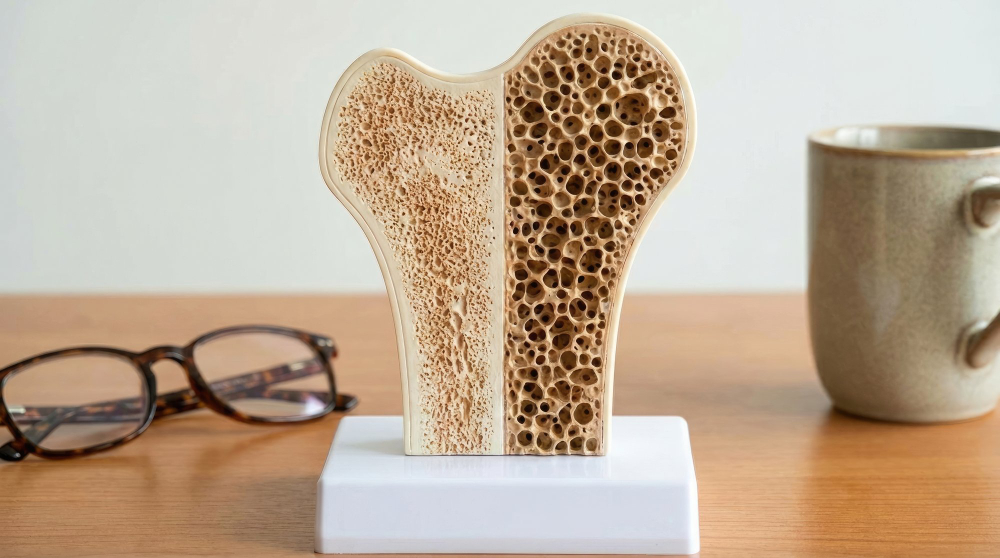
Osteoporosis is a disease that makes bones weak and easy to break. Because bone health is important at every age, it helps to know how osteoporosis works. With this condition, bones lose minerals like calcium. As a result, bones become thin and fragile. According to the World Health Organization, osteoporosis affects millions of people worldwide. In fact, it is more common in older adults, especially women. For many, there are no signs until a bone breaks. That is why early action matters.
Common Symptoms of Osteoporosis
Often, osteoporosis is called a “silent disease.” This is because you may not notice symptoms at first. However, as bone density loss continues, signs can appear. For example, you might notice:
Still, many people have no symptoms until a fracture happens. Therefore, regular check-ups are important, especially if you have risk factors.
Causes and Risk Factors for Osteoporosis
Many things can cause osteoporosis. Some people are more at risk than others. For instance, age is a big factor. As you get older, your bones naturally lose strength. In addition, women are more likely to get osteoporosis, especially after menopause. Other risk factors include:
Because these risks add up, it is helpful to talk with your doctor about your bone health.
How Osteoporosis Is Diagnosed
Doctors use several tools to check for osteoporosis. Most often, a bone density test is used. This test is painless and quick. It measures how strong your bones are. For example, the DEXA scan is a common test. It checks the bone density in your hip and spine. If your results show bone density loss, your doctor may suggest more tests. Sometimes, blood tests are done to check calcium and vitamin D levels. Early diagnosis can help you start osteoporosis prevention sooner.
Effective Treatments for Osteoporosis
There are many ways to treat osteoporosis. Because each person is different, your doctor will help choose the best plan. Treatments may include:
For many people, a mix of medicine and lifestyle changes works best. The CDC notes that sticking to your treatment plan lowers your risk of broken bones.
Lifestyle Tips for Stronger Bones
Healthy habits can make a big difference for your bones. Even small changes help. For instance, you can:
Because these steps are simple, anyone can start today. Over time, they help protect against bone density loss.
Preventing Osteoporosis and Fractures
Prevention is key when it comes to osteoporosis. While you cannot change your age or family history, you can lower your risk. For example, regular exercise and a healthy diet support strong bones. Also, getting bone density tests as you age helps catch problems early. If you have other health issues, work with your doctor to manage them. According to experts, most fractures from osteoporosis can be prevented. By acting now, you can keep your bones strong and lower your chance of a break.
Conclusion
If you are concerned about your bone health or risk of osteoporosis, Dr.Ramesh is here to help. Schedule a consultation today to learn how you can protect your bones and stay healthy.